Each week we rummage around SprocketList in the hopes of uncovering some spectacular deal on a nice used ATV so as to offer hope to those in need of a new (or new to them) set of wheels for the upcoming season.

This week we happened across an ad that takes us to a place called Stafford, VA.

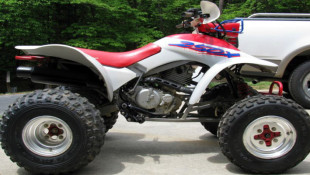
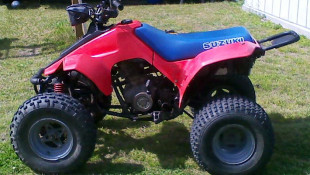
The specimen in question grabbed our attention simply because the Suzuki LTZ Quadsport 400 just so happens to be one of our absolute favorite ATVs of all time thanks to their versatility and reliability. This particular example is a 2003 model year and quite affordable to boot.


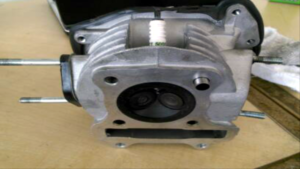
As the ad states: The four wheeler is in good shape and just had the top end of the engine rebuilt including a fresh timing chain, valves and piston rings.

The only thing it may need are front tires eventually due to tread wear.

The poster is looking for $1500 and is open to a variety of potential trades including a scooter (gas/street legal), carry-on trailer (5 x 10 minimum), a golf cart or storage shed.

ATV Tech: The Mysterious Reed Valve

June 14th, 2012 by Jason Giacchino

In this day of four-stroke domination, many riders will never have had the experience of wringing out a high-revving two-stroke quad. This is a shame because two-strokes created a type of power delivery that even the peppiest four has difficulty reproducing. Best of all it managed to do it by weighing less, containing far fewer moving parts and at a fraction of the cost to manufacture/ maintain.

Even though brand-spanking-new 2-stroke ATVs exist only in the hallowed halls of rider memory, the technology that makes them tick still deserves closer examination. One of the bits unique to the “two-smoke” is the reed valve (or as its often called, “reeds”).

A reed valve is actually quite simple by design, consisting of flexible petals mated to a block connecting the carb to the top-end of the engine.

In its simplest form, the reed acts as a check valve; keeping fuel & air from being pushed into the intake tract. In other words the reed valve opens to allow fuel to enter the top end from the carburetor then closes up shop so that the fuel & air mix stays put to be combusted (rather than get spit back when the piston comes sailing up).

While this sounds like a fairly demanding job, the actual process occurs quite naturally. Rather than rely upon mechanical means of operation, the reed is all about using something that surrounds us at all times: atmospheric pressure.

When the piston plummets down its bore, a low-pressure zone on the engine side is created, causing the reed petals to flex open. Fuel and air then pass through the reed block. Once the piston returns upward, that lower pressure finds itself suddenly to the intake tract side and as such the petals are again forced to close tight.

Early reed petals were constructed of metal but like most components, have evolved to incorporate advances in technology, which have made them both lighter and stronger over time: From stainless steel to fiberglass to most recently, carbon fiber.

Modern systems like Moto Tassinari’s VForce3 reed valve system have gone to great lengths toward becoming a true ‘bolt-on’ modification (opposed to an engine tear-down affair like in years past). With technological advances like snap together construction, reed petal replacement incredibly quick and easy. This is certainly a good thing considering your reeds open and close 133 times per second at 8000 rpm!


A common misconception in the world of engine performance is that going bigger bore on the cylinder is a shortcut to limitless power gains. The editors of ATV Connection have done their share of boring read… erm, cylinders, throughout the years.  Let’s clear up some of the common myths and facts to the weird and wonderful world of engine bores.

All cylinders regardless of number of cycles, type of cooling, or size are measured in terms of bore (diameter of the cylinder/ piston that sits within it) and stroke (length of cylinder/ distance the piston travels up and down).

Both bore and stroke can be altered to influence the power characteristics of the engine. Big bore kits are very common among ATV enthusiasts on account of their ability to make more power fairly inexpensively and perhaps more importantly, can be used to replaced a scorn or damaged stock cylinder.

When you increase cylinder’s bore you are simultaneously increasing the piston’s surface area. What this means is that since you are spreading out the area responsible for dealing with the process of fuel & air igniting, performance gains can be experienced without any alterations to the compression ratio. This is important because once you start increasing compression; factors such as decreased reliability and having to run race gas enter the equation. As a general rule, making power increases without altering cylinder compression can make life a lot easier in the long run.

While even small changes in bore can make noticeable differences to your machine’s powerband, sky is not the limit when it comes to going bigger. The fact of the matter is the relationship between bore and stroke is taken into careful consideration by the engineers in designing the motor. It is entirely possible to increase the bore past optimal in terms of the stroke thereby losing gains in usable power.

Additionally going too far with bore can weaken the walls of the cylinder. There is unimaginable force being exerted on the cylinder wall with each and every stroke of the piston and compromised strength can lead to catastrophic failures.

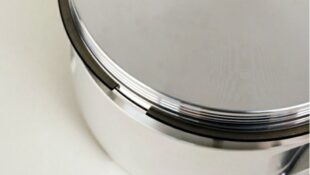
Many big bore kits forgo the entire process of boring out & honing the stock cylinder to increase its diameter and simply include a brand new oversize cast cylinder & piston that bolts up to the stock engine’s lower end.


Jetting/ fuel map changes are not always necessary to maximize power changes associated with going bigger bore. In fact generally speaking, the smaller the engine, the more sensitive it will be to changes in fuel delivery to compensate (ie: the more likely you will have to make jetting changes).

Additional Disadvantages to over-boring include:

· Too large a bore can result in incomplete combustion/ excessive un-burnt fuel
· A larger piston in motion adds additional stress to the rod and crank
· Possibility of increased engine vibration due to the heavier piston
· Inability to run typically much more common OEM piston

However, when done correctly and to the optimum spec, a larger bore is a fairly simple means of increasing an engine’s power output and a lifesaver for those individuals who have damaged or scratched their ATV’s stock cylinder.

Dear ATVC:

Back in the two-stroke days, I used to freshen up the top end of my quad with regular frequency but quite frankly, the complexity and cost of a modern four-stroke engine intimidates me. Is there any way to know when I’m due for fresh rings without actually tearing down my top end?


Absolutely! Begin with the exhaust pipe. Is it smoking like the ashtray at a smokers anonymous meeting? There’s your first indicator. Additionally check the joints and sealing where the head pipe meets the manifold and where the pipe meets the muffler. Abundant oil collecting as these junctions is also not a good sign for the health of your rings.

Like with any engine, ring tolerance (along with the state of tune of the piston) dictates compression. Hence if your ATV’s compression suddenly drops, it’s very likely worn rings are the culprit.

But above all else, keep an eye on your engine’s oil consumption. Check the oil breather tubes before and after a ride. A little moisture here is normal but dripping/ leaking oil breather tubes is another sign of oil blowing by the cylinder seal being created by the piston’s rings. If you’re noticing you need to add oil after a couple hours in the saddle, you’re likely due for a fresh top end.

Got questions for us? Ask them here!