
Ask The Editors: Why Do ATV Tires Have a Land / Sea Ratio?
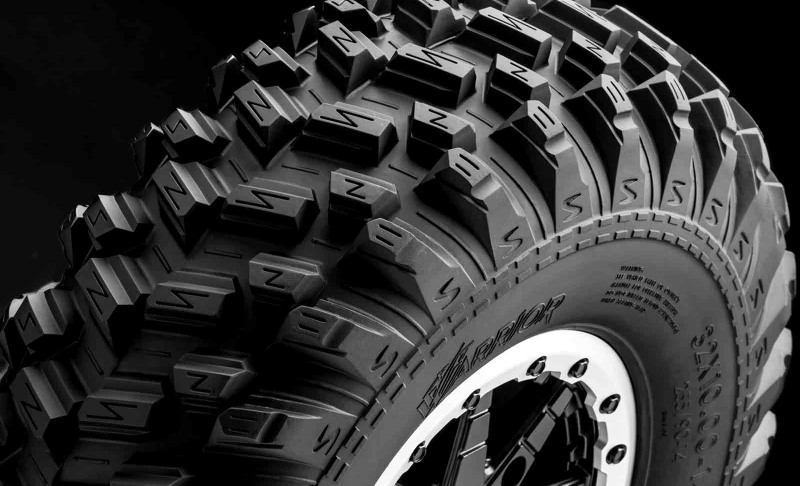
It may sound amphibious but it’s a legit metric.
While we can’t say we love the naming convention, land / sea ratio is a legit measurement for all tires. In its simplest terms think of it like this – the part of the tire that touches the ground is the land and the space between is the sea. Your knobbies are like little islands.
In the off-road segment, this number isn’t talked about as much as it is tires that are designed for on and off-road use (things like overland, Jeeps, dual sport bikes and so on). But the truth is, this figure does apply to any knobby. Why? Well think about this – if the knobs are super close together, they start to act like the contact patch itself and the spaces between them become non-factors.
Similarly, super far apart and you may gain traction (look at sand paddles for example) but the ride quality on hard pack becomes akin to running over speed bumps.
Essentially this number lets you know the ratio of knobs and spaces so that you can select the tire best for your riding conditions. A high land / sea ratio (more land, less sea) are generally the better choice for hardpack and trail use while a low land / sea ratio (more sea, less land) would be the move for loose, soft conditions like sand and mud.
And we can go one step further – if you take recommended PSI into consideration, now you have to contemplate land, sea and air when selecting your next meats.

You must be logged in to post a comment.