
The Gripping Story Of Air Filter Oil

Do we ever think about this stuff? Should we?
Our machines require a whole myriad of different fluids, oils, slimes and lubes to do what they do. For the most part, we try and do right by these. Whether buying synthetic, trusted brands, dealer recommended products etc.
But how often do we really think about air filter oil? It’s not very exciting, and when it’s doing its job, you barely notice.
So what is it, really? How important is it? Why should you care? This article should help answer all of these questions.
What Is It?

It’s a typically sprayed-on combination of lube, cleaner, and tackiness designed to evenly coat your air filter element (be it paper or foam) so that dust and contaminants don’t make their way inside your engine.
Is It Important?
Surprisingly so. In your car – sure, it’s peace of mind on the roads. In the off-road world we call home? It’s crucial. Ever ride in a group and see that distinctive haze of multiple vehicles kicking up dust on the trail? Ever get home from a ride, take off your goggles and realize you look like an inverse racoon around the eyes? Ever get that gritty feeling of dirt particulates on your teeth after a romp?
All of these scenarios mean that dirt, grime and dust is being sucked into your air-box as well. You don’t want this being pulled into the delicate internals of your expensive engine.
Shouldn’t The Filter Element Be Enough?
We look at it like this – is there such a thing as too much protection? A filter element (air cleaner) is a must. A dried out one or crumbling one that itself is getting sucked into your engine is doing you no favors either. Keeping the element good and lubed is protecting from airborne particles but it’s also keeping the filter element good and moist/ extending its life.
Will A Well-Lubed Filter Increase Horsepower?
No! In fact, it may even decrease it by a minuscule fraction. Why? Engines are glorified air pumps. The more air they can gulp, the better they perform. The best performance would be no filter and no airbox lid. Of course, that would be until the first thing got sucked into the engine and blew it up. We play in a dirty, gritty environment (even more so when dry/ sandy conditions enter the equation). The goal here is to extend the life of your engine, not extract every possible 10th of a horsepower.
What’s The Filter Oil Made Of?
Usually a combination of things. The greatest of these is the oil itself – whether synthetic or good old fashioned plant-based (think soy). Next are usually cleaners – these are solvents used to cut through old grime so that the oil can penetrate as deeply as possible. Isopropyl alcohol – this thins out the oil and then quickly evaporates after contract with the air. Emulsifiers – these make the filter oil sticky. You want want that oil sticking to the element rather than running off and pooling in the bottom of your air-box (or worse still, getting sucked into the engine right through the element). Flame retardant – as you might expect, oil and other flammable components alone would not be ideal in the event of a backfire.
What’s The Correct Way To Apply It?
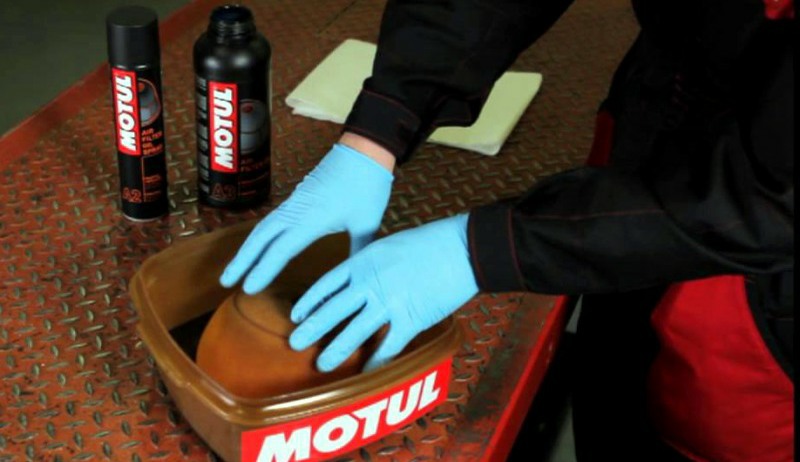
You may have seen a lot of trail-side engineering where the air box lid is removed and a few sprays inside but the correct method is to remove the filter element entirely, saturate the foam from all angles, wring out the excess oil so that the element is damp everywhere then reinstall.

And remember – leaving it saturated and dripping is just as bad as leaving the element too dry. It’s all about that sweet spot. Most cans will tell you the correct ratio per surface area.
Are There Other Forms?
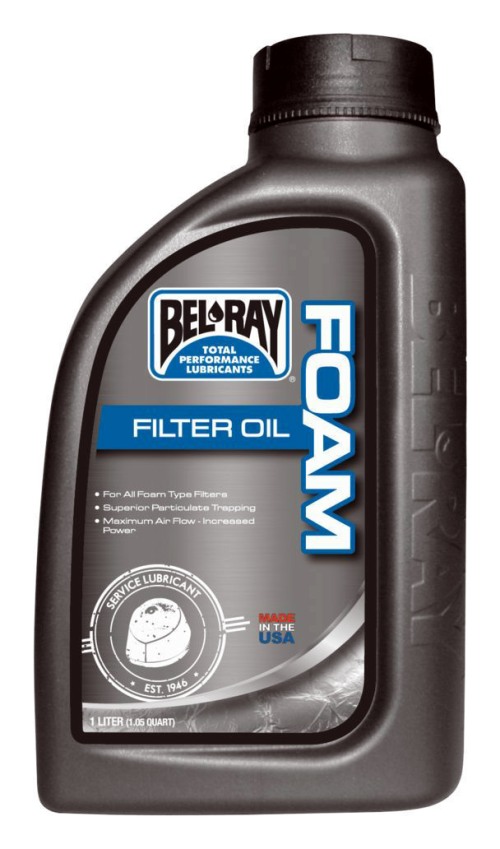
Absolutely. While once spray was your only option, these days there are foams and even bottles. Each container explains the application process and proper amount to use.
What About In A Pinch?
So what happens when you arrive to the sand pit, pop open your air-box lid and realize your filter element is as dry as the scrub brush? It’s not our first choice but use motor oil if you have to. Again the key here is even coverage and no dripping. Take the element out, get it wet with oil and wring it as dry as you can get it before putting it back inside.
You must be logged in to post a comment.