
Tire Smarts: Myths and Truths Exposed
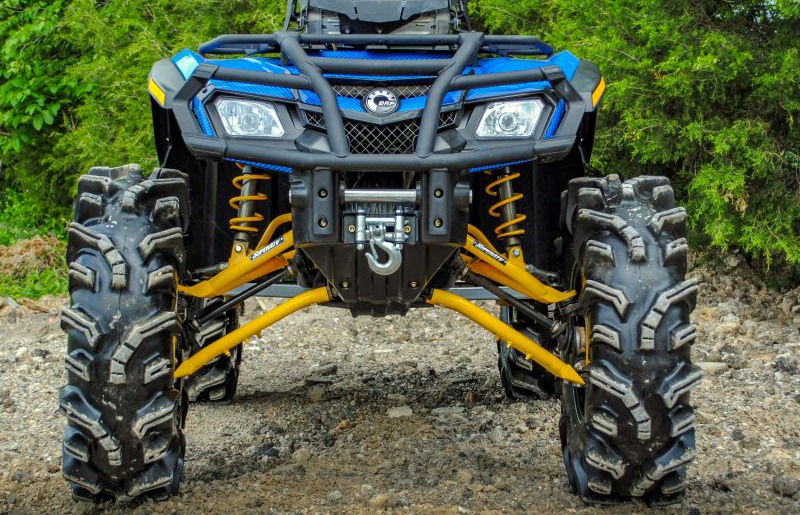
Mythbusters on the meats.
We spend a lot of time and money making our quads and SxSs perform on the cutting edge and yet without fail witness some very odd behaviors when it comes to the four points of rubber that connect machine with planet.
Tires are a fact of off-road life and everyone seems to have a theory as to what’s best. Let’s take a look at some of the myths and set the record straight.
Stock Tired Need To Go
We’ll be the first to admit – there was a time when most machines on the showroom floor came with simple knobbies designed simply for the widest variety of terrain. Back then, swapping the stockers out for something purpose-built was one of the first mods on the table. Thankfully, those days are done.

Most manufacturers have done away with in-house tire production and spec the same tires from the same brands that you would spend your money on anyway. They’re simply getting them cheaper by buying in volume.
Check your spec sheet carefully before tossing anything OEM to the side. And remember that any specific trim package you buy these days (example a mud edition) is already going to include purpose-spec’ed rubber.
Set It And Forget It Air Pressure
Most riders, ourselves included, tend to inflate our tires to the recommended PSI and leave well enough alone until they start to look flat visibly. Here’s the truth – tires lose pressure (and can gain pressure) with regularity. Air is a fickle mistress. We are all aware that it can thin out and thicken up every time we walk outside and take a deep breath but forget that this same phenomenon is taking place inside our tire carcasses as well.

Ideally we should be checking it at regular intervals and adjusting accordingly. Which takes us to the next entry:
Recommended PSI Is Set In Stone
Recommended PSI usually arrives in a range rather than a single number for a reason. The manufacturer let’s you know the pressure range for the tire to function without failure but fine tuning the exact number takes a bit of input by the operator. Why? Because we don’t all ride in the same conditions. If you are clawing for traction, coming in on the lower side of the PSI range is often the way to go to gain additional grip from your tires. The same applies to sand or snow. Conversely trails of hard-pack or smooth stone where steering response needs to be responsive benefit from the higher end of the PSI spectrum.
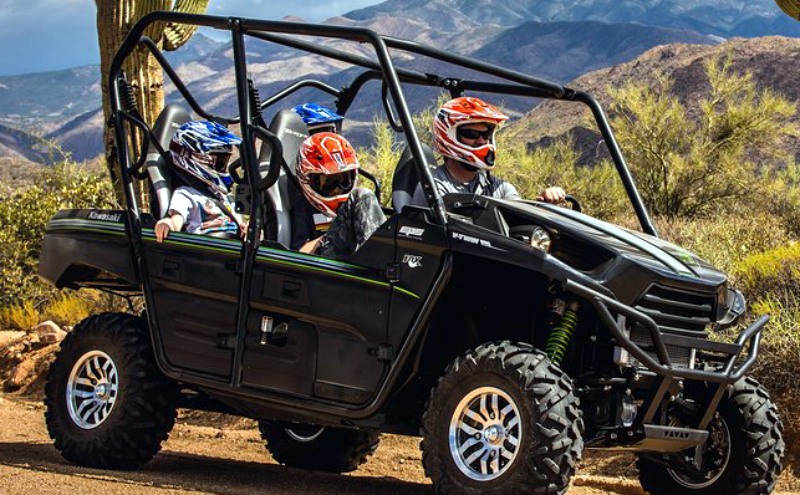
Increased weight of passengers or cargo is also cause to run on the high side of the recommended PSI range.
Traction Is Everything
We’ve heard riders complain that their new aggressive tires are junk because they don’t find as much traction as the units they had before. Here’s the reality about tire pattern design – often manufacturers are juggling a variety of conditions and coming up with strengths in some areas and compromising others. That same rider that complained traction wasn’t as great didn’t realize his stopping distance had been reduced by 15 feet. We’ve encountered others where aggressive side-knobs mean more precise handling in corners.

When researching your tires either when it comes time to replace or even with what the factory is spec’ing with your new purchase, find that particular tire’s strengths and weaknesses then compare that to what you expect in your riding.
Ply Me To The Moon
While it’s true more carcass plies generally equate to increased durability out on the trails, there is actually such a thing as too much of a good thing. If there wasn’t, companies would just keep adding plies until there was no air chamber left at all.

Plies add cost and weight to the formula. On lighter machines, this weight can actually affect the handling of the vehicle.
The key here is find the sweet spot between durability and handling when deciding how many plies are right for your next tire purchase.
You must be logged in to post a comment.