


250 2 atroke won't start
 May 3, 2009 | 06:57 PM
#1

Thread Starter
|
Trailblazer
Joined: Dec 2008
Posts: 36
Likes: 0
 250 2 atroke won't start
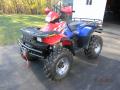
I'm trying to fix a friends 4 wheeler.
Its a 2003 250.
He brought it to me because it would run , but if it idled it would finally die then wouldn't start. Bored it out and put in a new Wiseco piston and now it just won't start.
I have spark.
I have fuel. even tried spraying brake cleaner in the carb to fire it off. Nothing. It just got worse.
I pulled the plug and did the finger over the hole test for compression and it blows my finger off.
Pulled the carb and it's actually pretty clean. Reset the Float was all I did for it. It was full of fuel.
Any Ideas on what to check next?
Seals? I hope not.
Its a 2003 250.
He brought it to me because it would run , but if it idled it would finally die then wouldn't start. Bored it out and put in a new Wiseco piston and now it just won't start.
I have spark.
I have fuel. even tried spraying brake cleaner in the carb to fire it off. Nothing. It just got worse.
I pulled the plug and did the finger over the hole test for compression and it blows my finger off.
Pulled the carb and it's actually pretty clean. Reset the Float was all I did for it. It was full of fuel.
Any Ideas on what to check next?
Seals? I hope not.

 May 4, 2009 | 01:07 PM
#5
Thread Starter
|
Trailblazer
Joined: Dec 2008
Posts: 36
Likes: 0
Bone head Oops
Ok I went ahead and pulled the Drain plug.
Broke it loose with a wrench then it was just fingers to get it out.
Nothing came out.
Started it back in , but It was not threading in very easy.
I put a wrench to it, the whole time thinking, This Aint Right.
Well it wasn't. I don't know why I kept on going. It snapped off.
Now I get to pull the engine and start Drilling it out and retapping it for another bolt I guess.
I believe I know the answer here, The Crank case being sealed up good is pretty vital to a 2 stroke running , Right?
As far as the other posts. Something about fuel in the exhaust.
I have tried to start it, It seems it almost wants to start with the Choke on.
If I spray Some Carb cleaner at the Carb, it seems to try Less to start.
I pulled the plug, I have spark.
I Also checked the plug a couple different times and it was wet once but not Soaked.
Books says this thing has a Mikuni Carb. But thats not the name on the carb.
I'll be looking at this thing some more tonight.
Thanks for the help so far.
Couple more things.
Some times with the throttle open trying to start it will backfire a little. Like once ever 4th or 5th time I try to start it.
I'll get a compression tester to make sure I have enough compression.
Ok I went ahead and pulled the Drain plug.
Broke it loose with a wrench then it was just fingers to get it out.
Nothing came out.
Started it back in , but It was not threading in very easy.
I put a wrench to it, the whole time thinking, This Aint Right.
Well it wasn't. I don't know why I kept on going. It snapped off.
Now I get to pull the engine and start Drilling it out and retapping it for another bolt I guess.
I believe I know the answer here, The Crank case being sealed up good is pretty vital to a 2 stroke running , Right?
As far as the other posts. Something about fuel in the exhaust.
I have tried to start it, It seems it almost wants to start with the Choke on.
If I spray Some Carb cleaner at the Carb, it seems to try Less to start.
I pulled the plug, I have spark.
I Also checked the plug a couple different times and it was wet once but not Soaked.
Books says this thing has a Mikuni Carb. But thats not the name on the carb.
I'll be looking at this thing some more tonight.
Thanks for the help so far.
Couple more things.
Some times with the throttle open trying to start it will backfire a little. Like once ever 4th or 5th time I try to start it.
I'll get a compression tester to make sure I have enough compression.
Last edited by bugsquawsher; May 4, 2009 at 01:09 PM. Reason: Adding info
May 4, 2009 | 02:16 PM
#6

Pro Rider
Joined: Nov 2004
Posts: 266
Likes: 0
After you replace the bolt, proceed as noted below.
Brake Cleaner (Big no-no - can ruin plastic and rubber parts and is not meant to be "run" in an engine) and carb cleaner are not very good for starting an engine. Only use starting fluid to start an engine.
If you have an engine running, carb cleaner will always slow it down - so you are fighting yourself trying to get it to start while spraying carb cleaner.
Start by shutting off the gas & emptying the float bowl. Then turn the gas on and let it run out of the float bowl for a count of 4 seconds. Close the float bowl drain and let it fill back up. Try starting it with a fully charged battery and the choke on.
If it still will not idle and does not seem to run properly, replace both the main and the pilot jets with brand new ones of the exact same size. This is an important step. Even if they look clean - they can be flowing at the wrong rate.
When you remove the carb to replace the jets, attach the straw and spray CARB cleaner through every hole that you can find (Not BRAKE parts cleaner!).
Be sure to empty the float bowl before reinstalling the carb and you should be good to go.
Brake Cleaner (Big no-no - can ruin plastic and rubber parts and is not meant to be "run" in an engine) and carb cleaner are not very good for starting an engine. Only use starting fluid to start an engine.
If you have an engine running, carb cleaner will always slow it down - so you are fighting yourself trying to get it to start while spraying carb cleaner.
Start by shutting off the gas & emptying the float bowl. Then turn the gas on and let it run out of the float bowl for a count of 4 seconds. Close the float bowl drain and let it fill back up. Try starting it with a fully charged battery and the choke on.
If it still will not idle and does not seem to run properly, replace both the main and the pilot jets with brand new ones of the exact same size. This is an important step. Even if they look clean - they can be flowing at the wrong rate.
When you remove the carb to replace the jets, attach the straw and spray CARB cleaner through every hole that you can find (Not BRAKE parts cleaner!).
Be sure to empty the float bowl before reinstalling the carb and you should be good to go.
May 4, 2009 | 08:09 PM
#7
Thread Starter
|
Trailblazer
Joined: Dec 2008
Posts: 36
Likes: 0
After you replace the bolt, proceed as noted below.
Brake Cleaner (Big no-no - can ruin plastic and rubber parts and is not meant to be "run" in an engine) and carb cleaner are not very good for starting an engine. Only use starting fluid to start an engine.
If you have an engine running, carb cleaner will always slow it down - so you are fighting yourself trying to get it to start while spraying carb cleaner.
Start by shutting off the gas & emptying the float bowl. Then turn the gas on and let it run out of the float bowl for a count of 4 seconds. Close the float bowl drain and let it fill back up. Try starting it with a fully charged battery and the choke on.
If it still will not idle and does not seem to run properly, replace both the main and the pilot jets with brand new ones of the exact same size. This is an important step. Even if they look clean - they can be flowing at the wrong rate.
When you remove the carb to replace the jets, attach the straw and spray CARB cleaner through every hole that you can find (Not BRAKE parts cleaner!).
Be sure to empty the float bowl before reinstalling the carb and you should be good to go.
Brake Cleaner (Big no-no - can ruin plastic and rubber parts and is not meant to be "run" in an engine) and carb cleaner are not very good for starting an engine. Only use starting fluid to start an engine.
If you have an engine running, carb cleaner will always slow it down - so you are fighting yourself trying to get it to start while spraying carb cleaner.
Start by shutting off the gas & emptying the float bowl. Then turn the gas on and let it run out of the float bowl for a count of 4 seconds. Close the float bowl drain and let it fill back up. Try starting it with a fully charged battery and the choke on.
If it still will not idle and does not seem to run properly, replace both the main and the pilot jets with brand new ones of the exact same size. This is an important step. Even if they look clean - they can be flowing at the wrong rate.
When you remove the carb to replace the jets, attach the straw and spray CARB cleaner through every hole that you can find (Not BRAKE parts cleaner!).
Be sure to empty the float bowl before reinstalling the carb and you should be good to go.
I put a compression tester on it today.
It has no Shrader valve in it. I had it bounce between 0 and 50
I put a shrader valve in it and got nothing.
I Blew it with my 120 PSI rubber tipped Air gun and got 50 PSI
I have nothing I trust now.
Top end is rebuilt. But I over torqued the top end then let it off and re torqued it to the proper of close to spec. I would thing it would seal.
Trending Topics
May 7, 2009 | 10:17 AM
#9
Pro Rider
Joined: Nov 2004
Posts: 266
Likes: 0
It should have reeds (Nearly all 2 strokes do) - they are between the intake manifold and the cylinder (You have to remove the carb and the intake manifold to get to them. You want to make sure that they are all there (None missing, warped or cracked) and that they are sitting shut (No gaps).
If you are able to find a reliable compression tester, you want to see at least 100psi after a couple revolutions. 100 is the MINIMUM that will run and does indiciate that a rebuild is in order. A freshly rebuilt (Mostly stock) engine should register between 140-160 psi.
When I torque down a head, I set my torque wrench to 1/4 of the specified torque. I always go in a criss-cross pattern. Once all head nuts are torqued, I then go to 3/4 of spec'd torque (Again in a criss cross pattern). Then I go to full spec and criss-cross 1 last time. Once I run the engine for a few minutes, I let it cool completely and retorque 1 last time.
If you are able to find a reliable compression tester, you want to see at least 100psi after a couple revolutions. 100 is the MINIMUM that will run and does indiciate that a rebuild is in order. A freshly rebuilt (Mostly stock) engine should register between 140-160 psi.
When I torque down a head, I set my torque wrench to 1/4 of the specified torque. I always go in a criss-cross pattern. Once all head nuts are torqued, I then go to 3/4 of spec'd torque (Again in a criss cross pattern). Then I go to full spec and criss-cross 1 last time. Once I run the engine for a few minutes, I let it cool completely and retorque 1 last time.
May 7, 2009 | 07:50 PM
#10

Pro Rider
Joined: Feb 2006
Posts: 392
Likes: 1
From: cedar rapids ia
It should have reeds (Nearly all 2 strokes do) - they are between the intake manifold and the cylinder (You have to remove the carb and the intake manifold to get to them. You want to make sure that they are all there (None missing, warped or cracked) and that they are sitting shut (No gaps).
If you are able to find a reliable compression tester, you want to see at least 100psi after a couple revolutions. 100 is the MINIMUM that will run and does indiciate that a rebuild is in order. A freshly rebuilt (Mostly stock) engine should register between 140-160 psi.
.
If you are able to find a reliable compression tester, you want to see at least 100psi after a couple revolutions. 100 is the MINIMUM that will run and does indiciate that a rebuild is in order. A freshly rebuilt (Mostly stock) engine should register between 140-160 psi.
.
and i'd like to see a stock 250 anywhere near 140-160 psi more like 120-135
stock compression is only 6.1/1 effective