
Weird Tech: How Will Electric Vehicles Have Heating and AC?
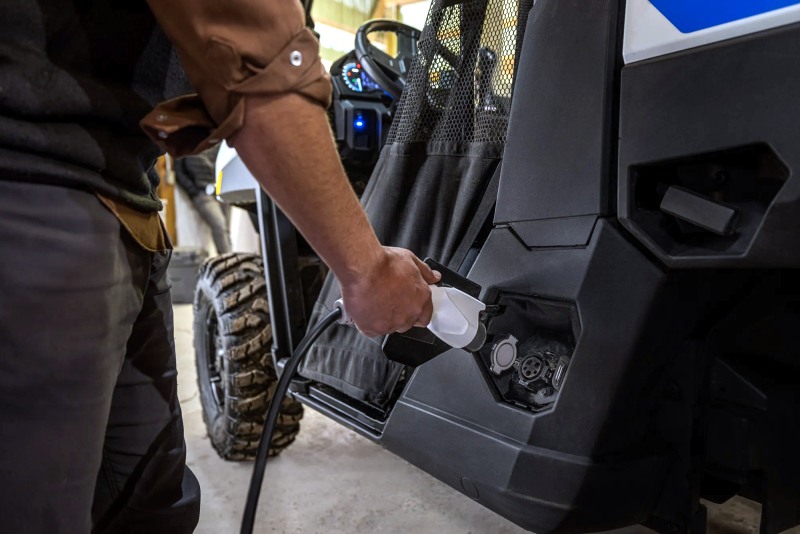
We take for granted how effective heating and AC work with our gas-driven vehicles.
These days features that used to be commonplace in the automobile world are steadily making their ways into the off-road arena/ What kind of things, you ask? Well, fuel injection, ABS, GPS, power steering (EPS), and a whole bunch of other alphabet soup. But we’re talking specifically about climate control today. Fully enclosed side-by-sides have opened up the door to HVAC – heating, ventilation and air conditioned UTVs. And, when it comes to gasoline powered 4-stroke engines, years of automotive inspired design transfer over easily. But what’s going to happen with electric powered vehicles, which use wheel-mounted motors and rechargeable batteries for power just like giant versions of the cell phone in your pocket?
To explore this new conundrum, let’s first take a moment to get up to speed with how heating and AC typically work with an internal combustion engine. Heating is especially easy. Why? Because a byproduct of friction within the internal combustion is heat. An engine’s coolant gets piping hot every time it passes through the engine block and the heat it collects to move away from the engine is free energy. It pools up in a heater core where a fan pushes it into the cabin. The whole system is effective, reliable and capitalizes on the nature of the internal combustion process.
AC is a bit more of an undertaking but the internal combustion engine still makes it very doable. Refrigerant absorbs heat from the cabin as it transitions from liquid to gas. From there an engine (belt) driven compressor pressurizes the refrigerant before a condenser releases the heat its carrying outside. The refrigerant is then allowed to expand once more, causing a drop in pressure and temperature. It passes through an evaporator, where your fan blows through the coils, sending cool, dry air into the cabin.
In short – the engine has always played a crucial role in the heating and cooling of the passenger compartment of our vehicles. So what happens when you remove the engine entirely and replace it with batteries and four electric motors?
Since electric motors don’t produce heat as a byproduct and there is no crankshaft to drive an AC compressor, everything needs to be self-contained and battery powered in an EV. An EV will need a separate electric motor and inverter (to convert DC power from the battery into AC) and a separation system to keep compressor oil and refrigerant separate.
Heating, too, since there is no hot engine coolant flowing requires its own battery powered electric heater. So far we’ve seen two popular approaches to this – either an electric powered heat pump that can collect heat from outside using a liquid medium that then gets circulated into the cabin via a pump before fans blow across the conduits – blowing the heat into the interior. The downside here, though, is that once temperatures outside get too cold, you aren’t left with a means of adequately heating the medium. This takes us to the second option – an dedicated electric heater not unlike a space heater in one’s home. These work by passing an electrical current across a heating element (think wires designed with resistance like a toaster). A fan then blows over the element, pushing the heat being generated there into the cabin.
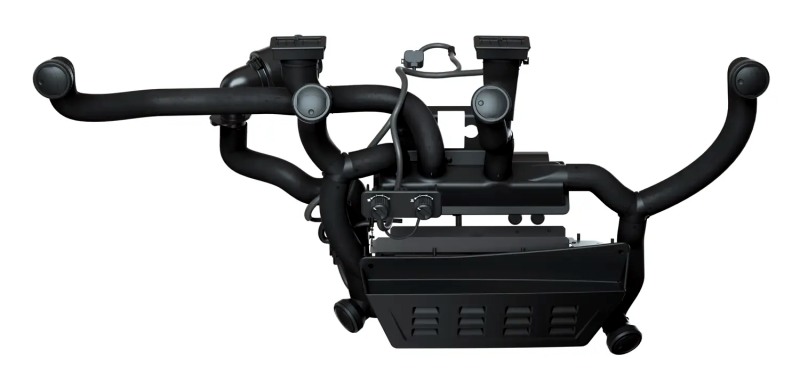
The downside of these current technologies is that, as you’d expect, they can drain batteries that are already being taxed to move the vehicle even faster. The upside is that there is no waiting for an engine to warm up to begin heating the cabin and, since the AC wouldn’t require the engine to spin a compressor belt, you could run the AC with the vehicle off.
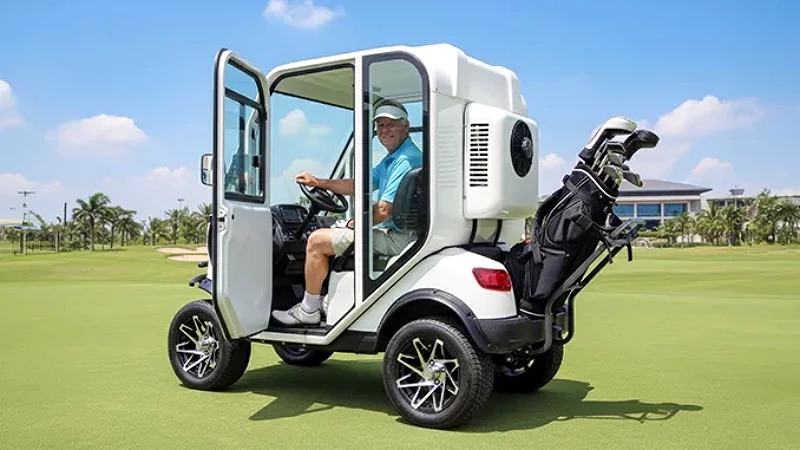
As of right now, companies are still feeling their way with trying to bring heat and AC into off-road EVs. Neither of the Polaris Kinetic EV Rangers come with factory HVAC, though they do have aftermarket electric heater kits available. Massimo has just introduced HVAC for their MVR EV golf cart line (see pic below) that uses dedicated electric heating and AC that draws from the batteries. We suspect this will also be the system they implement later this year when their first EV SxS releases.
You must be logged in to post a comment.