


View Poll Results: Has this post helped you?


Voters: 25. You may not vote on this poll
How do you make the AC handle better.
 Jan 28, 2008 | 07:23 AM
#111

Thread Starter
|
Pro Rider
Joined: Aug 2005
Posts: 1,245
Likes: 0
 How do you make the AC handle better.
<div class="FTQUOTE"><begin quote>Originally posted by: oldturtle
I don't think I made myself very clear on benefits of lighter tires and wheels. No doubt that when the most traction is needed like mud then heavier tires will sink thru the mud and find traction. I was thinking of the situation where traction is plentiful but you want the suspension to get over the bumps easier. I believe I saw somewhere that the Quad Terrain Racing Series was won the last two years by Arctic Cat 650 single with 25x8 tires front and rear. I couldn't confirm this but I would like to know for sure.</end quote></div>
The simple law of physics as it pertains to a body in motion, "A body in motion tend to stay in motion until an equal or opposing force acts upon it". So with smaller bumps, the heavier tires and wheels will return a smoother ride and not have the tires bounce so much, thus less suspension work. Heavier will always return a smoother ride. By comparison with a Cadilac and a VW bug.
So with respect to tires and wheels the heavier wheel and tires will resist deflection more than light ones, until the force acting upon them are equal or greater than the weight.
I don't think I made myself very clear on benefits of lighter tires and wheels. No doubt that when the most traction is needed like mud then heavier tires will sink thru the mud and find traction. I was thinking of the situation where traction is plentiful but you want the suspension to get over the bumps easier. I believe I saw somewhere that the Quad Terrain Racing Series was won the last two years by Arctic Cat 650 single with 25x8 tires front and rear. I couldn't confirm this but I would like to know for sure.</end quote></div>
The simple law of physics as it pertains to a body in motion, "A body in motion tend to stay in motion until an equal or opposing force acts upon it". So with smaller bumps, the heavier tires and wheels will return a smoother ride and not have the tires bounce so much, thus less suspension work. Heavier will always return a smoother ride. By comparison with a Cadilac and a VW bug.
So with respect to tires and wheels the heavier wheel and tires will resist deflection more than light ones, until the force acting upon them are equal or greater than the weight.
Jan 28, 2008 | 08:52 PM
#112

Pro Rider
Joined: Jan 2005
Posts: 859
Likes: 0
How do you make the AC handle better.
<div class="FTQUOTE"><begin quote>the heavier wheel and tires will resist deflection more than light ones, until the force acting upon them are equal or greater than the weight. </end quote></div>
good point, if you are going slow enough, but won't that resistance to movement also prevent the suspension from reactly as quickly to terrain as it could if you had a light tire/rim, making it a rougher ride in many cases? I would assume you are primarily concerned with traction and not 'spirited' riding?
good point, if you are going slow enough, but won't that resistance to movement also prevent the suspension from reactly as quickly to terrain as it could if you had a light tire/rim, making it a rougher ride in many cases? I would assume you are primarily concerned with traction and not 'spirited' riding?
Jan 29, 2008 | 07:29 AM
#113
Thread Starter
|
Pro Rider
Joined: Aug 2005
Posts: 1,245
Likes: 0
How do you make the AC handle better.
<div class="FTQUOTE"><begin quote>Originally posted by: MikeM
<div class="FTQUOTE"><begin quote>the heavier wheel and tires will resist deflection more than light ones, until the force acting upon them are equal or greater than the weight. </end quote></div>
good point, if you are going slow enough, but won't that resistance to movement also prevent the suspension from reactly as quickly to terrain as it could if you had a light tire/rim, making it a rougher ride in many cases? I would assume you are primarily concerned with traction and not 'spirited' riding?</end quote></div>
Spring rates are set by the weight of the machine and not the tires and wheels they are there to hold up the ATV. Lighter wheels and tires only contribute to faster acceleration by having less weight to get going in a hurry and in a lot of cases will also spin easier.
I wrote the article to improve on the suspension and handling characteristics of the AC's, but also understand that the AC's are a heavy Utility ATV and not a light Sport ATV. With proper settings you can get a little more sport ride from the AC's. So with a Utility ATV traction is the name of the game.
<div class="FTQUOTE"><begin quote>the heavier wheel and tires will resist deflection more than light ones, until the force acting upon them are equal or greater than the weight. </end quote></div>
good point, if you are going slow enough, but won't that resistance to movement also prevent the suspension from reactly as quickly to terrain as it could if you had a light tire/rim, making it a rougher ride in many cases? I would assume you are primarily concerned with traction and not 'spirited' riding?</end quote></div>
Spring rates are set by the weight of the machine and not the tires and wheels they are there to hold up the ATV. Lighter wheels and tires only contribute to faster acceleration by having less weight to get going in a hurry and in a lot of cases will also spin easier.
I wrote the article to improve on the suspension and handling characteristics of the AC's, but also understand that the AC's are a heavy Utility ATV and not a light Sport ATV. With proper settings you can get a little more sport ride from the AC's. So with a Utility ATV traction is the name of the game.
Jan 29, 2008 | 01:06 PM
#114
Pro Rider
Joined: Jan 2005
Posts: 859
Likes: 0
How do you make the AC handle better.
And I thought spring rate was set by the spring height vs force at various stages of compression. I also thought the tire was part (albeit a small part) of the overall spring rate. I also thought lighter tires (unsprung weight) contributed to a better/quicker working suspension (as well as acceleration, ute or not, but that was mostly because you reduced rotational mass, not specifically unsprung weight), by reducing the inertia from bumps and letting the springs/shocks do their job quicker (instead of transferring it to the atv/rider). The amount of movement is inversely proportional to the weight. Right?
Jan 29, 2008 | 11:52 PM
#115

Pro Rider
Joined: Feb 2004
Posts: 628
Likes: 0
How do you make the AC handle better.
The vehicle designers have concluded that the lighter the unsprung weight (tires, wheels, brakes,etc ) or more specifically the higher the ratio of sprung weight to unsprung weight then the better the suspension compliance over rough tracks.
For anyone interested in understanding this situation I suggest doing a Google search for unsprung weight and find item by RQ Riley and study. While at this you will find several other very good articles that all have same conclusion.
So for vehicle like a utility quad you will always have the potential for best suspension compliance or smoothest ride with the lightest tires and wheels. This is because you have maxed out the ratio of sprung to unsprung weight.
A totally seperate and unrelated situation is that the lightest tires and wheels have less rotational mass to spin and will therefore spin up quicker.
Negative qualities of smaller diameter tires include more wheel travel over many sized bumps. The larger diameter will more easily roll over some bumps. Larger diameter tires will have more ground clearance.
For anyone interested in understanding this situation I suggest doing a Google search for unsprung weight and find item by RQ Riley and study. While at this you will find several other very good articles that all have same conclusion.
So for vehicle like a utility quad you will always have the potential for best suspension compliance or smoothest ride with the lightest tires and wheels. This is because you have maxed out the ratio of sprung to unsprung weight.
A totally seperate and unrelated situation is that the lightest tires and wheels have less rotational mass to spin and will therefore spin up quicker.
Negative qualities of smaller diameter tires include more wheel travel over many sized bumps. The larger diameter will more easily roll over some bumps. Larger diameter tires will have more ground clearance.
Feb 16, 2008 | 12:22 PM
#117
Pro Rider
Joined: Jun 2000
Posts: 1,830
Likes: 0
How do you make the AC handle better.
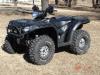
Here are some pics of my Tcat with the TRVs shocks and springs. The TRVs set an inch or two lower then the standard t-cat. It also has the factory swaybar installed and 6 ply Goodyear Rawhides. It handels night and day better then when I first brought it home.
STOCK

TRV's lowered setup

STOCK
TRV's lowered setup
 Mar 12, 2008 | 01:11 AM
#120
Thread Starter
|
Pro Rider
Joined: Aug 2005
Posts: 1,245
Likes: 0
How do you make the AC handle better.
<div class="FTQUOTE"><begin quote>Originally posted by: oldturtle
The vehicle designers have concluded that the lighter the unsprung weight (tires, wheels, brakes,etc ) or more specifically the higher the ratio of sprung weight to unsprung weight then the better the suspension compliance over rough tracks.
For anyone interested in understanding this situation I suggest doing a Google search for unsprung weight and find item by RQ Riley and study. While at this you will find several other very good articles that all have same conclusion.
So for vehicle like a utility quad you will always have the potential for best suspension compliance or smoothest ride with the lightest tires and wheels. This is because you have maxed out the ratio of sprung to unsprung weight.
A totally seperate and unrelated situation is that the lightest tires and wheels have less rotational mass to spin and will therefore spin up quicker.
Negative qualities of smaller diameter tires include more wheel travel over many sized bumps. The larger diameter will more easily roll over some bumps. Larger diameter tires will have more ground clearance.</end quote></div>
Thanks all for your contributions. It may be true for lighter tires and wheels to offer better performance for a sportier ride but for my money I will stay with steel wheels and heavy tires for "get down grunt pulling traction". I still get a fun ride and as smooth as can be expected but I also have good traction. I seldom ride to the point of maximizing the performance of the suspension system - such as in a 'Baha race' so with that being said my personal choice is 'heavy'.
I have mentioned before that I am a destination rider (60-100 mile jaunts - get there and get back). I also guide, out of state riders. So far I can travel a little bit faster and get stuck less than most others. It works for me!!!
It is not all suspension but also tire tread design, riding style (body english), usable power to the ground traction. I also have stated that too much power is worse than not enough in many, many situations (you don't see too many bulldozers or tractors with "full blown hemi" engines either). 45 plus years of 4x4 of some sort has taught me this. I once had a flat head 1946 Willeys Jeep that probably had less than 30 hp that was just about un-stopable in woods riding, and certainly got stuck less than many other V8 and 6cyl vehicles than I have owned (didn't have enough power to spin the wheels - lol).
So, in conclusion, whether you use light tires and wheels or heavy tires and wheels the point is that the suspension and ride can be improved with some tuning and the article was written to give some key points as to how to tune a suspension without guessing, and doing a 'hit or miss' approach.
Good luck to all and thanks for everyones contribution and help, and thanks for keeping the link alive.....
The vehicle designers have concluded that the lighter the unsprung weight (tires, wheels, brakes,etc ) or more specifically the higher the ratio of sprung weight to unsprung weight then the better the suspension compliance over rough tracks.
For anyone interested in understanding this situation I suggest doing a Google search for unsprung weight and find item by RQ Riley and study. While at this you will find several other very good articles that all have same conclusion.
So for vehicle like a utility quad you will always have the potential for best suspension compliance or smoothest ride with the lightest tires and wheels. This is because you have maxed out the ratio of sprung to unsprung weight.
A totally seperate and unrelated situation is that the lightest tires and wheels have less rotational mass to spin and will therefore spin up quicker.
Negative qualities of smaller diameter tires include more wheel travel over many sized bumps. The larger diameter will more easily roll over some bumps. Larger diameter tires will have more ground clearance.</end quote></div>
Thanks all for your contributions. It may be true for lighter tires and wheels to offer better performance for a sportier ride but for my money I will stay with steel wheels and heavy tires for "get down grunt pulling traction". I still get a fun ride and as smooth as can be expected but I also have good traction. I seldom ride to the point of maximizing the performance of the suspension system - such as in a 'Baha race' so with that being said my personal choice is 'heavy'.
I have mentioned before that I am a destination rider (60-100 mile jaunts - get there and get back). I also guide, out of state riders. So far I can travel a little bit faster and get stuck less than most others. It works for me!!!
It is not all suspension but also tire tread design, riding style (body english), usable power to the ground traction. I also have stated that too much power is worse than not enough in many, many situations (you don't see too many bulldozers or tractors with "full blown hemi" engines either). 45 plus years of 4x4 of some sort has taught me this. I once had a flat head 1946 Willeys Jeep that probably had less than 30 hp that was just about un-stopable in woods riding, and certainly got stuck less than many other V8 and 6cyl vehicles than I have owned (didn't have enough power to spin the wheels - lol).
So, in conclusion, whether you use light tires and wheels or heavy tires and wheels the point is that the suspension and ride can be improved with some tuning and the article was written to give some key points as to how to tune a suspension without guessing, and doing a 'hit or miss' approach.
Good luck to all and thanks for everyones contribution and help, and thanks for keeping the link alive.....

