Ask the Editors- Is an ATC the same as an ATV?

April 21st, 2013 by Jason Giacchino

87BrochureLargeEnglish
Dear ATVC:

A friend of mine’s dad calls all ATVs “ATCs” even though we constantly correct him. What does ATC mean anyway?

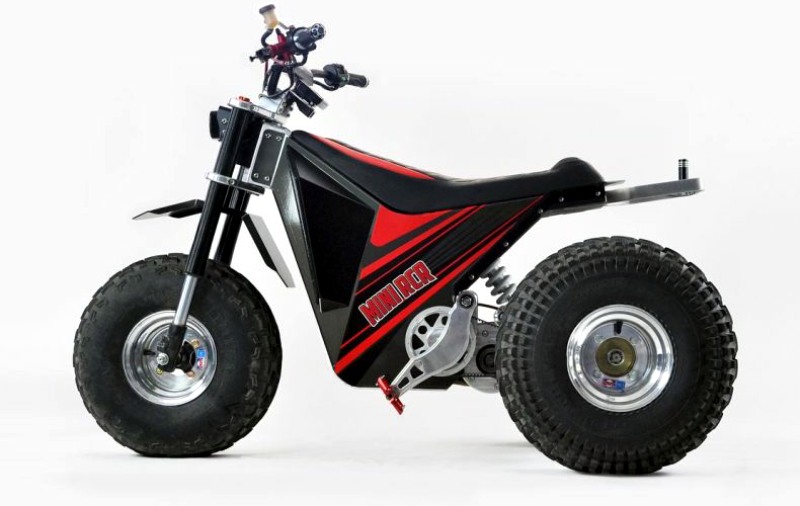
ATC or all-terrain cycle was Honda’s designation for its 3-wheeler line. Don’t forget, while today’s do-it-all quads and UTVs have very little in common with motorcycles on a given manufacturer’s line, this certainly wasn’t the case in the late 1970s/ early 80s.

Interestingly, as the industry evolved to require a minimum of four wheels, Honda changed its model prefix from ATC to Fourtrax (or just “TRX”); a tradition that it carries on even to this day.

Got questions for us? Ask them here!

atv-x-lawnchair

Here’s something you rarely witness in our Friday Funny silliness: two riders actually wearing helmets and appropriate safety gear! Of course one of them happens to be on an old bent-up chair being towed on the ice of a frozen pond but hey, we’ll take what we can get around here.

According to the video’s description: “After having a midday dinner (Editor’s note: Wouldn’t the correct term for this be “lunch”?), one of the chairs was breaking. We decided to take it for a spin.” And by a spin, they of course mean a fall.

We’re also not sure how the photographer got his girlfriend to agree to pilot the chair but however he did it, guys, take it away.

Friday Funny: Big Man Goes a Tumbling

March 1st, 2013 by Jason Giacchino

Friday-Funny-ATV
What we have here in today’s installment highlighting the foolishness that people tend to do when an ATV and video camera enter the equation is a man in ill-fitting shorts and his Yamaha Grizzly, a few rocky hills and the law of gravity.

What we don’t have is a helmet (naturally), skill or a whole lot of common sense but hey, the rider seems unharmed and there’s always a lesson to be learned by someone else’s mistakes.

Dear ATVC:

Only after I showed up to my favorite local trail system with my new 300cc Honda Fourtrax did I find out that the trail was limited to 250cc models and under.

What’s worse is my “300” is actually only a 282cc. Is there any science that proves that those extra 32cc’s make any sort of difference as far as damaging a trail goes?

Sadly there is no such science and in fact quite the opposite: What tests have been performed have proven that engine size on ATVs has nearly nothing to do with resulting trail damage, yet this is the standard many Natural Resources Departments limit when trying to reduce trail damage.

Their logic behind this probably started with the reasoning that smaller models are likely ridden by younger riders who are less likely to tear things up. The reality of course is that creating a displacement cut off does little more than discriminate certain ATV models rather than the rider (and degree of trail responsibility) himself.

As anyone who has ridden can attest, there are individuals out there on minis who can cause plenty of damage and 1000cc monsters that plod along with the utmost respect for the trail. Is this system fair? Absolutely not and a testament to the importance of ATV trail advocacy groups who fight to keep land open for us all to enjoy.

Got questions for us? Ask them here!

As I write this guide, nearly half a foot of snow has fallen outside and they’re not calling for a break for several days. Some people see this as an excuse to hibernate until spring, others a great opportunity to get dressed up to go skiing and others still, time to try and get the snow blower up and running.

We here at ATV Connection fall into the camp here fresh powder simply means an opportunity to shred on our ATVs. Snowmobiles certainly have their purpose but, with a little technique and patience, quads can make the winter months a whole lot more enjoyable. Here’s our guide for getting you out into the accumulation and, perhaps more importantly, back home again for hot chocolate and a whole lot of good memories.

Tip 1) Tire Status

It’s very easy to get into trouble with tires that are either too mild (as in closely spaced tread, designed to ride on grass without tearing up the ground) or too worn. Such tires can be pressed into service in the summer and maybe even in rain-slicked conditions but with snow, the more aggressive the tread, the better. We’ve actually heard of some riders running dedicated sand paddles to displace maximum powder. If the snow is particularly wet or packy, chains may be on the agenda.

Tip 2) Winch

Sure it seems obvious, but outside of hardcore mudding, nowhere is a winch more valuable than winter wonderland ATV touring. Having the winch is one thing, knowing when and how to use it is quite another. We always recommend brushing up on proper winching technique before getting out there.

Tip 3) Rock ‘n Roll

The most common form of “stuck” when it comes to snow riding happens when the machine’s frame comes to rest on packed snow, effectively suspending the wheels off the ground. When this happens, factors like tire tread and how many drive wheels your quad has become irrelevant.

Assuming you ignored our second tip, standing to put all of your weight on the pegs and rocking back and forth (side to side) while applying steady application of the throttle is your best bet to break free.

Tip 4) Clothing Considerations

Okay so reminding you to dress warm is pretty self-explanatory but simply slipping on the ol snowsuit is a good way to get yourself overheated. While this sounds like a good thing on a cold winter’s day, the fact of the matter is sweating when it’s cold out is a major no-no. The key is to dress in layers, and don’t forget to wear a backpack to carry layers that you shed.
The outer layer should be the most wind resistant of your wear and vented ski gear makes for solid under-layers because it whisks away body moisture.

Remember that most helmets have switches on their vents so as to minimalize airflow during cold temps. Consider a scarf or ski-mask to prevent a numb mouth/ runny nose but never at the expense of wearing a helmet. Finally treat your goggle lenses or visor with anti-fog spray.

Tip 5) Warm Hands = Warm Heart

The first thing to go numb will likely be your fingers and the fact that ATV handlebars are exposed to moving air only accelerates this process. Warm gloves are essential but even still expect additional heating on really cold rides. Taking a chapter from our snowmobile brethren, many aftermarket companies (and lately a few OEMs) offer heated grips. If you’re on a budget, we’ve had success picking up a few chemical heat packs (about $1 per pair) and stuffing them into our gloves & boots prior to the ride.